
HSScience · Usually grade 11 or 12
Anatomy and Physiology
How the human body is built and how it works, one body system at a time, with our own labeled drawings.
- 36lessons
- 4,320practice questions
- 228drawings
- 308flashcards
- EN · ES · PTEnglish, Spanish, Portuguese
Start with One Step: one high school course for $9.99 a month. Switch courses once every 30 days.
Start One StepAll 7 courses for up to 10 students: Every Step, $29.99 a month.
What this course covers
Anatomy is the study of how the body is built, and physiology is the study of how it works. This course puts the two together one body system at a time: the student learns the parts of each system, what each part does and how the systems keep the body in balance. It is the high school science course most closely tied to health careers such as nursing, physical therapy, occupational therapy and medicine.
There is no national anatomy and physiology standard, so our course follows the Texas Anatomy and Physiology standards in 36 lessons, checked against the Next Generation Science Standards and the National Health Science Standards, with 228 of our own labeled drawings. It moves from levels of organization, anatomical terms and homeostasis to tissues, skin, bones and joints, muscles, nerves and the senses, hormones, blood and the heart, immunity, breathing, digestion and metabolism, the kidneys, and reproduction, development and inheritance, and ends with how the systems work together and with health science careers.
Standards: Texas Anatomy and Physiology standards (19 TAC §127.423), with NGSS HS-LS1 and the National Health Science Standards. Every lesson lists its standard code.
By the end of the course, the student can
- Use anatomical position, directional terms and body planes to describe where any structure is
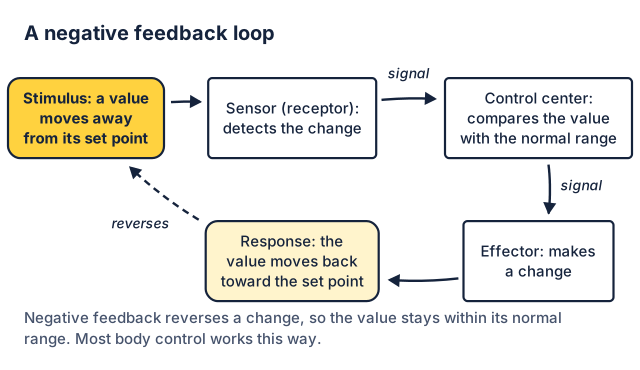
- Explain how negative and positive feedback keep the body in balance, and what happens when they fail
- Trace blood through the heart, air through the lungs, food through the digestive tract and filtrate through the nephron
- Explain how nerves, muscles, hormones and the immune system work, and how the body systems work together
Before you start: Biology and Chemistry, and Algebra 1 for rates, volumes and percentages; Physics helps but is not required.
What comes next: All high school courses
Inside every lesson
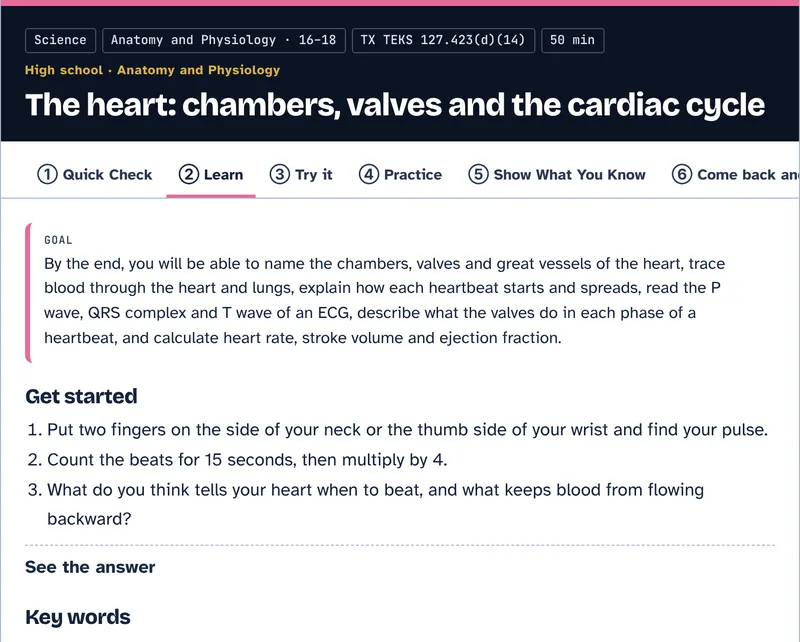
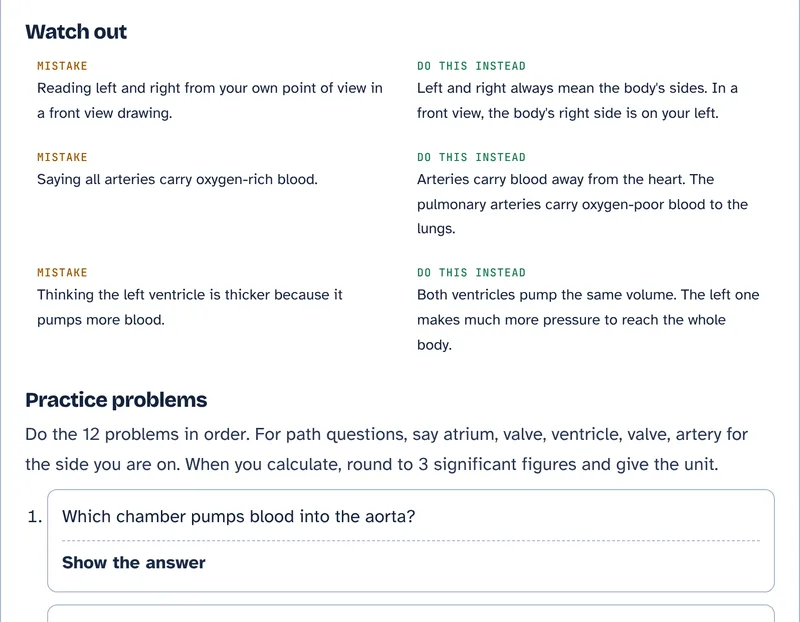
Each lesson runs the same six steps, so the student always knows what comes next. These are real screens from the Anatomy and Physiology course.
- Quick CheckThree questions on the skills this lesson needs. Miss two or more and the lesson points to what to review first.
- LearnThe idea in plain words, key vocabulary and worked examples, with a drawing whenever it helps.
- Try itGuided problems with the first steps shown, then fewer hints each time.
- PracticeThe common mistakes with the fix, then a full set of practice problems.
- Show What You KnowA scored check from a bank of 120 questions per lesson, with an explanation for every answer.
- Come back another dayA short spaced review a few days later, so the skill stays.
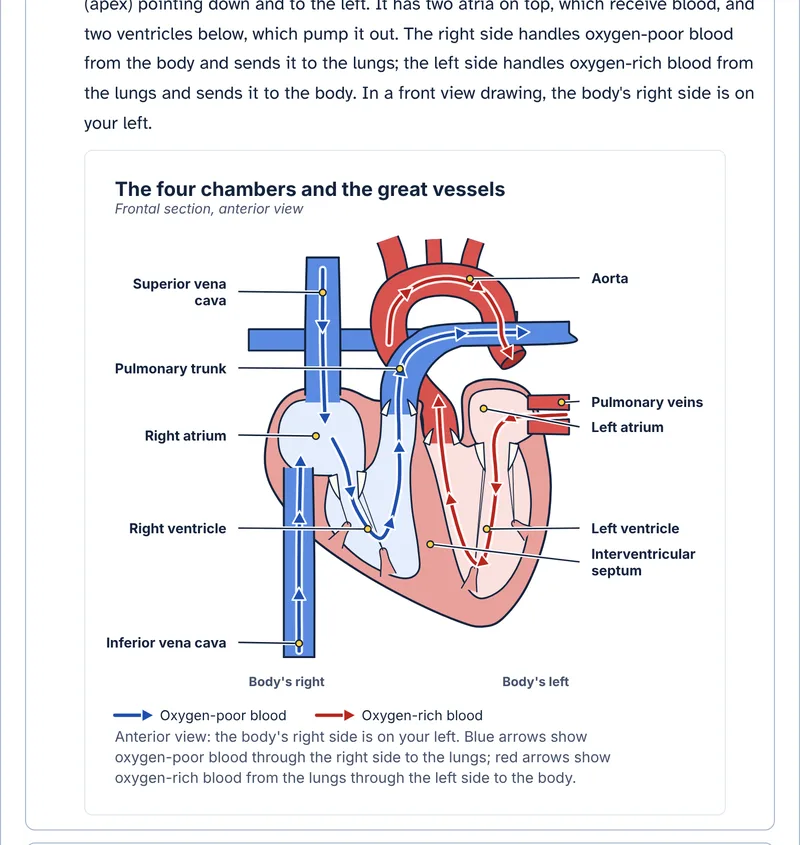
Drawings from the course
Every drawing is our own and is labeled for screen readers. A few of the 228 in this course:
Full course outline
36 lessons in 9 units, in the order we teach them. Each lesson lists its standard. Members open any lesson from here. High school lessons are part of membership. There is no free trial lesson.
Unit 1Organization of the body
Unit 2Skin, bones and joints
- 5The integumentary system: skin layers and what skin does
TX TEKS 127.423(d)(9) - 6Bone tissue, bone growth and repair
TX TEKS 127.423(d)(8) - 7The skeleton: axial and appendicular
TX TEKS 127.423(d)(8) - 8The spine: vertebrae, curves, discs and posture
TX TEKS 127.423(d)(8) - 9Joints and the movements they allow
TX TEKS 127.423(d)(8)
Unit 3Muscles and movement
Unit 4Nerves, senses and hormones
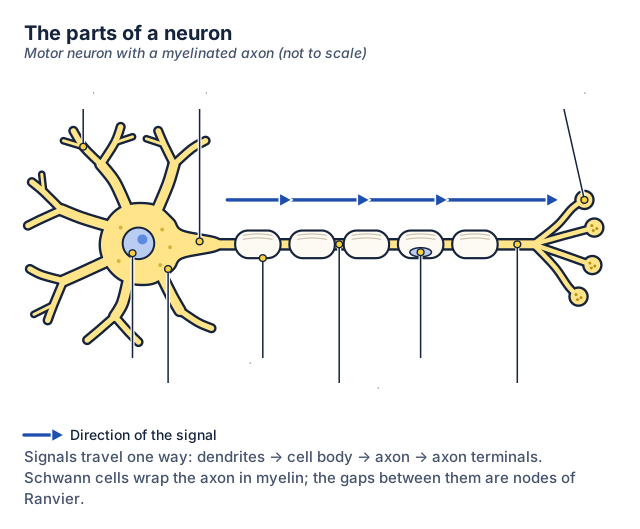
- 12Neurons and the nerve impulse
TX TEKS 127.423(d)(11) - 13Synapses and neurotransmitters
TX TEKS 127.423(d)(11) - 14The brain and spinal cord
TX TEKS 127.423(d)(11) - 15Peripheral and autonomic nervous system, and reflexes
TX TEKS 127.423(d)(11) - 16The special senses: vision, hearing, balance, taste and smell
TX TEKS 127.423(d)(11) - 17The endocrine system: glands and hormones
TX TEKS 127.423(d)(12)
Unit 5Blood, heart and circulation
Unit 6The lymphatic system and immunity
Unit 7Breathing, digestion and the kidneys
- 23The respiratory system and the mechanics of breathing
TX TEKS 127.423(d)(17) - 24Gas exchange and the control of breathing
TX TEKS 127.423(d)(17) - 25The digestive tract: mouth, esophagus and stomach
TX TEKS 127.423(d)(16) - 26Small and large intestine, liver and pancreas
TX TEKS 127.423(d)(16) - 27Nutrition and metabolism: energy from food
TX TEKS 127.423(d)(16) - 28The urinary system and the nephron
TX TEKS 127.423(d)(13) - 29Fluid, electrolyte and acid-base balance
TX TEKS 127.423(d)(13)
Unit 8Reproduction, development and inheritance
Unit 9The body as a whole
Try three practice questions
These come straight from the lesson banks, from three different lessons, from warm-up to stretch. Pick an answer, then open the explanation.
From lesson 5: The integumentary system: skin layers and what skin does
In thin skin, which layer of the epidermis lies directly above the stratum basale?
Show the answer
Answer: stratum spinosum. From deep to surface, thin skin has: stratum basale, stratum spinosum, stratum granulosum, stratum corneum. So the layer above the stratum basale is the stratum spinosum.
From lesson 17: The endocrine system: glands and hormones
Which hormone lowers blood glucose?
Show the answer
Answer: insulin. Insulin, from the pancreatic islets, lowers blood glucose.
From lesson 29: Fluid, electrolyte and acid-base balance
In one day a person takes in 2.64 L of water and loses 2.51 L. What is the net change in body water? (Invented values.)
Show the answer
Answer: 0.130 L. Net = in − out = 2.64 − 2.51 = 0.130 L. A positive value is a gain.
Anatomy and Physiology flashcards
308 cards with the vocabulary of every lesson, each with a definition. Flip, sort the ones you know, and review the rest. Included with membership to use on screen, or $14.99 for the set. Digital only, with no printable version.
- cellThe smallest unit of a living thing that can carry out the work of life on its own.
- cranium (brain case)The 8 skull bones that surround the brain. The other 14 skull bones form the face.
- saltatory conductionThe way a signal travels along a myelinated axon, jumping from one node of Ranvier to the next.
- myocardiumThe thick middle layer of the heart wall, made of cardiac muscle. It lies between the epicardium outside and the endocardium inside.
- peristalsisWaves of muscle contraction and relaxation that push food along the tract.
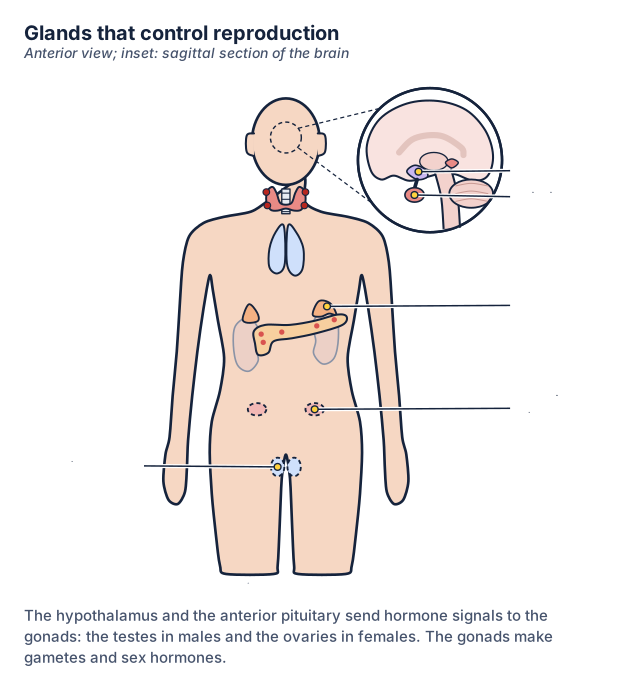
- FSH and LHFollicle-stimulating hormone and luteinizing hormone, made by the anterior pituitary when GnRH from the hypothalamus reaches it. They act on the gonads.
Studying more than one course? Save with a pass
Best for high school
High School Flashcards pass
$59.99one-time payment
All 7 high school courses, 1,812 cards, new courses added free
Save $44.94 compared with buying the 7 sets one at a time
Get the High School passEverything
All Flashcards pass
$79.99one-time payment
Every set on UpOnly Learning, 19 sets: high school, K to 8 and languages
Get everything for $79.99Membership includes every flashcard deck to use on screen. Printing is not included. See membership
Workbook coming soonWorkbook coming soon
A printable Anatomy and Physiology workbook is in the works. Until then, every lesson, practice set and flashcard deck is ready online, and each lesson prints cleanly from the browser.
Where Anatomy and Physiology leads
Anatomy and Physiology is part of the high school preparation for these college programs and majors. Each page lists the requirements with sources.
How to start today
- Become a memberStart with One Step: one high school course for $9.99 a month. Switch courses once every 30 days. For all 7 courses: Every Step is $29.99 a month or $249 a year. It opens all 7 high school courses, every K to 8 lesson and every flashcard deck for up to 10 students at home.
- Open lesson 1Start with Levels of organization and the 11 body systems. The Quick Check takes a few minutes.
- Follow the Quick CheckIf it shows a gap, review that one skill first. Then go lesson by lesson, at your own pace.
Questions families ask
Should Biology and Chemistry come before Anatomy and Physiology?
Yes, if possible. Texas lists one credit of biology and one of chemistry, IPC or physics before its Anatomy and Physiology course, which is why it is usually taken in grade 11 or 12. The lessons use cell and chemistry ideas such as diffusion and pH, and the Quick Check at the start of each lesson shows whether anything needs review first.
Which careers use anatomy and physiology?
Most health programs, including nursing, physical therapy, occupational therapy and physician assistant programs, include anatomy and physiology in college. Lesson 36 looks at health science careers, and the College prep pages below list each program's requirements with sources.
Does the course use photos of the body?
No. Every drawing is our own, made in code by UpOnly Learning and labeled, such as the heart with arrows for blood flow, the neuron and the nephron. Facts about disorders come from NIH pages such as MedlinePlus, and the course never gives medical advice.
The other high school courses
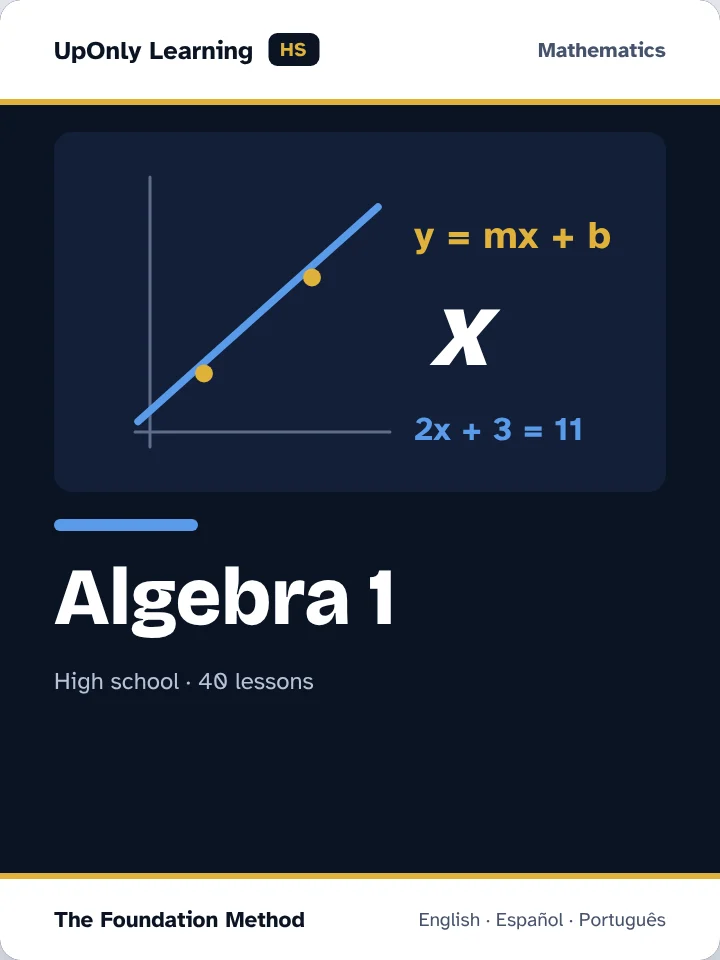 Algebra 1
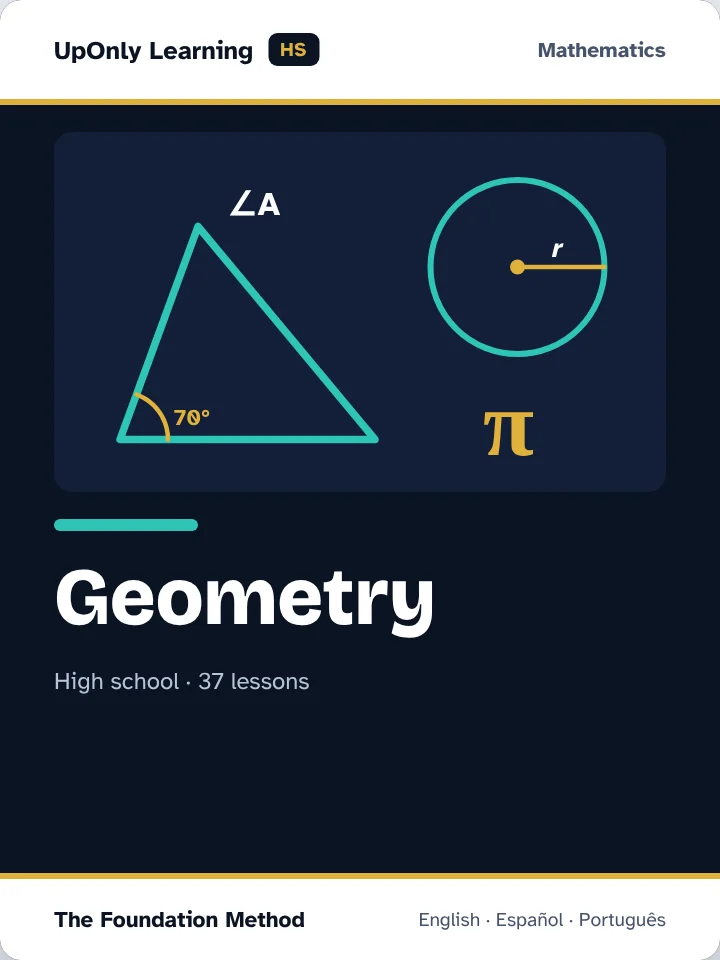 Geometry
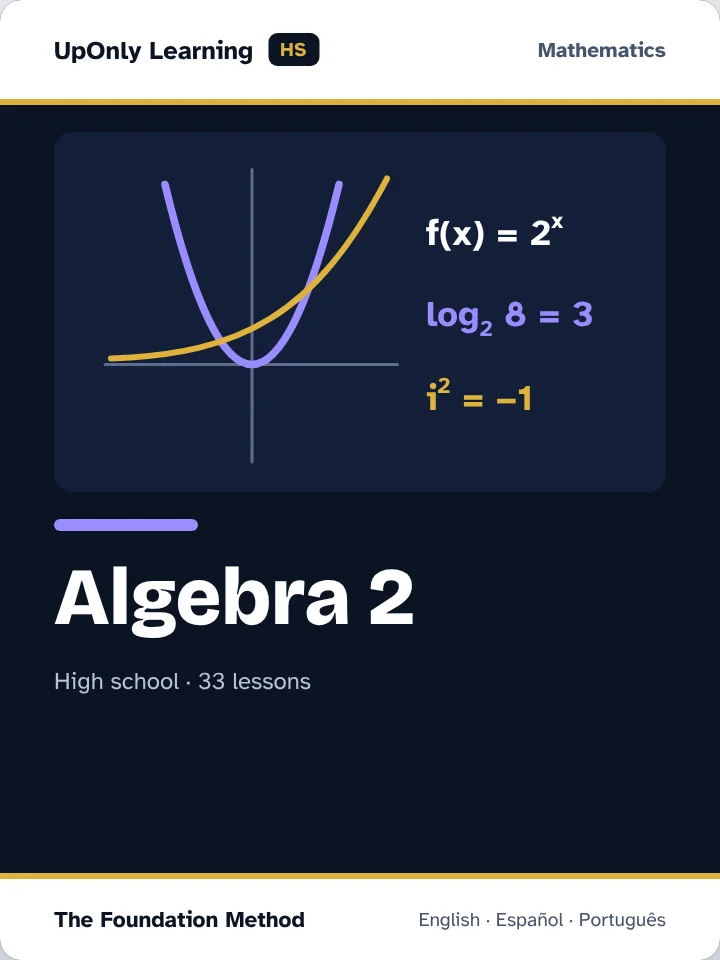 Algebra 2
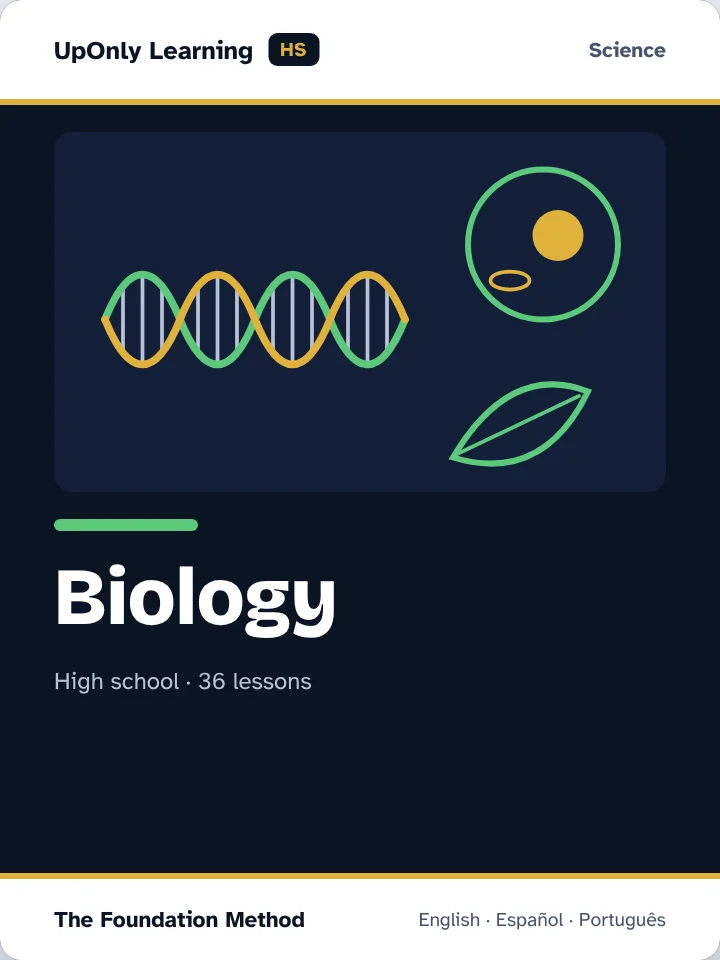 Biology
 Chemistry
 Physics
Written by Dr. Evan J. Hasson, Founder of UpOnly Learning.