
Free for everyone
Money & Economics: financial literacy for children and teens
From coins to countries
A free reference about money for kids, teens and grown-ups: what money is, earning and spending, saving and banks, borrowing, investing, crypto, the economy and who keeps money safe. Short, clear facts, each with its source.
Money for kids, from UpOnly Learning
Why Money and Economics Matter
Money is part of almost every day: buying lunch, saving for something special, earning a first paycheck. Money and economics explain how those choices work, from the coins in a pocket to the prices, jobs and banks that connect whole countries.
Money habits start early. The CFPB, a U.S. government agency, says money habits and norms really start to take shape as children watch how family members handle money[1].
Four facts to start
- 39
As of March 2026, 39 states required personal finance for high school graduation, by one count.[2]
- 505
In PISA 2022, U.S. 15-year-olds scored 505 points in financial literacy, close to the OECD average of 498. About 17 percent did not reach the baseline level.[3][4]
- 63%
In 2025, 63 percent of U.S. adults said they would cover a surprise $400 expense with cash or its equivalent.[5]
- $15.9 billion
People told the FTC they lost $15.9 billion to fraud. Knowing how saving, credit and scams work helps everyone make safer choices.[6]
What you’ll find here:
- From coins and paper money to banks, prices, jobs, investing, crypto and the economy
- Short facts at five levels, from kindergarten to grown-ups, each linked to its source (mostly U.S. government agencies)
- Who keeps money safe: the agencies, the laws and a neutral timeline
- Key words in English, Spanish and Portuguese, and practice links to our Life Skills and Business lessons
- Free for everyone. Educational, not financial advice
Start here by level
Pick a level to see its topics in every part. You can change it any time.
Free printable money worksheets
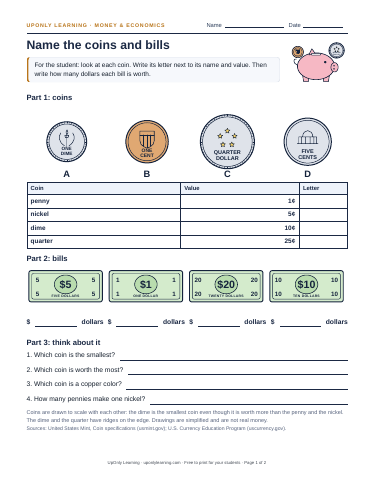
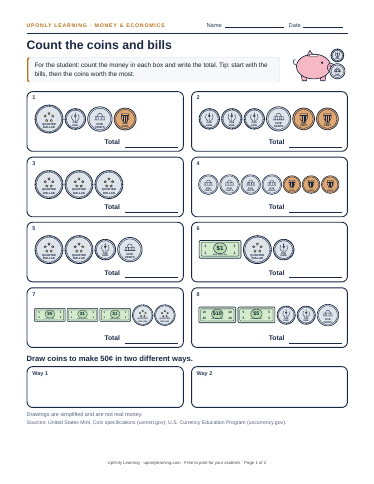
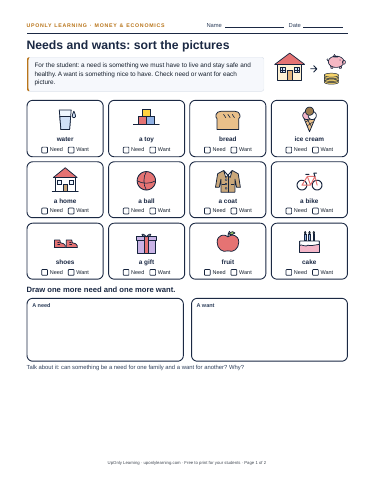
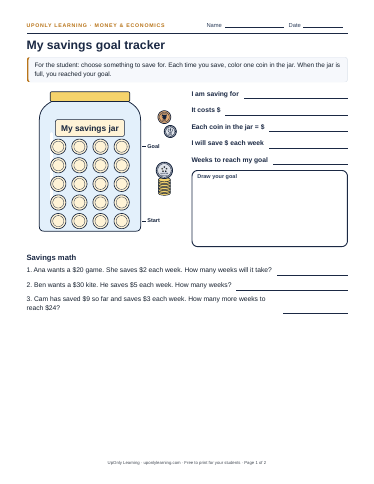
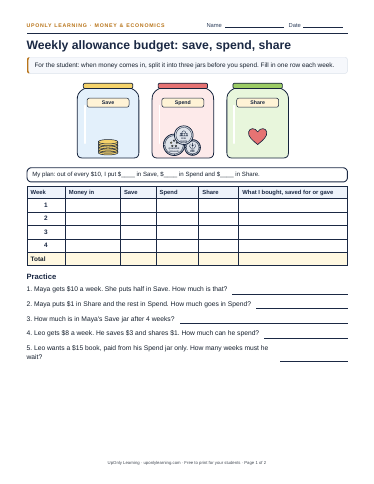
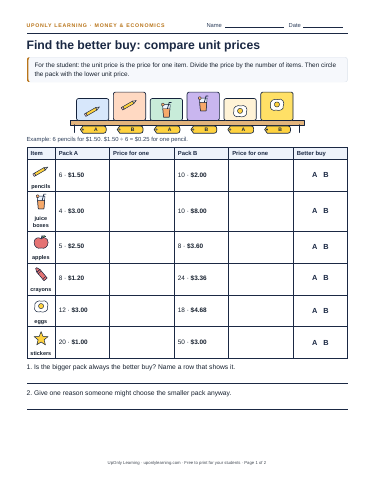
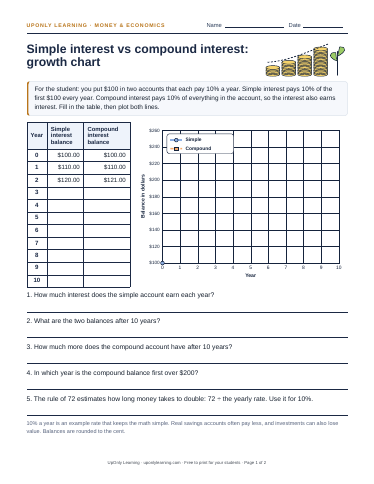
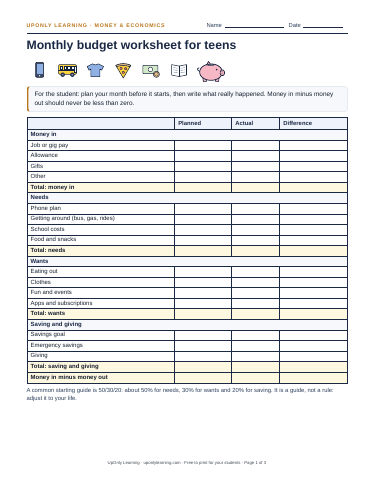
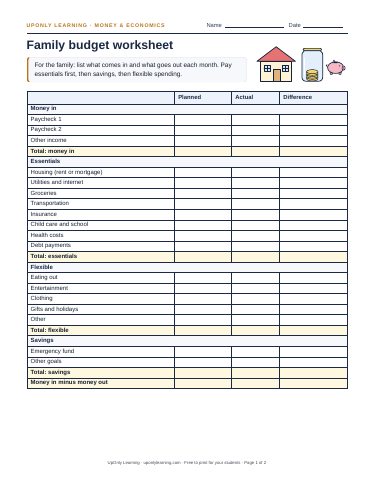
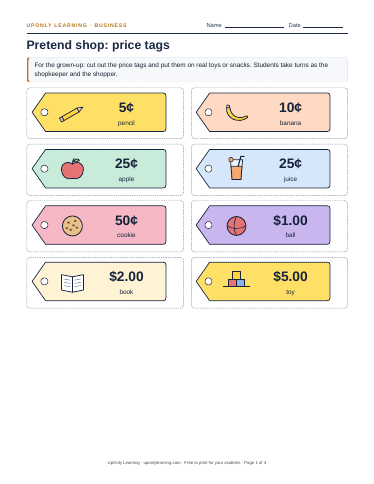
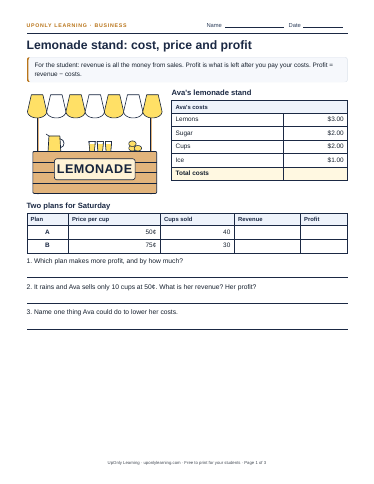
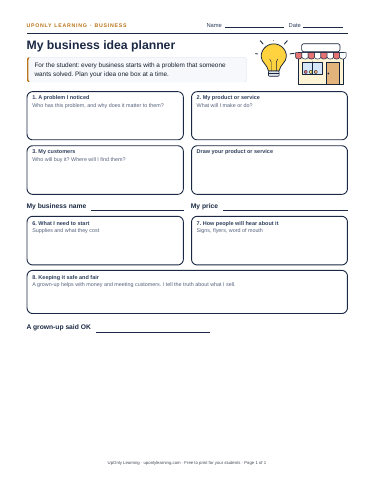
Coins, needs and wants, saving and budgeting sheets to print for your students, from kindergarten to grown-ups.
Every printable comes in full color and in black and white line art (low ink, ready to color in).
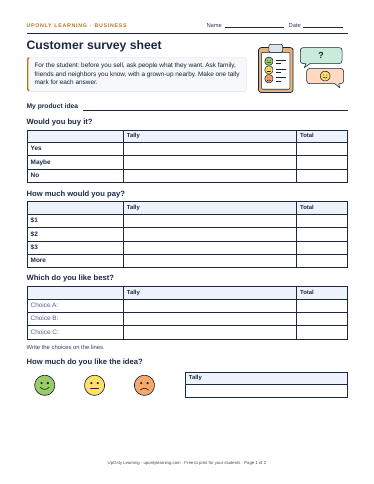
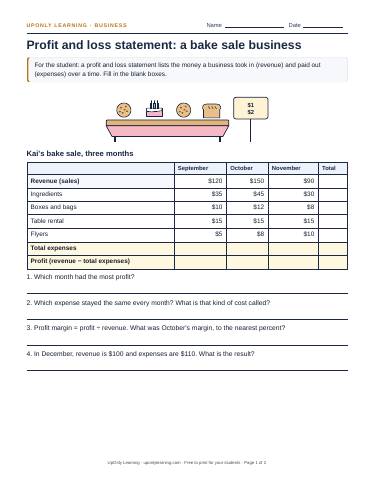
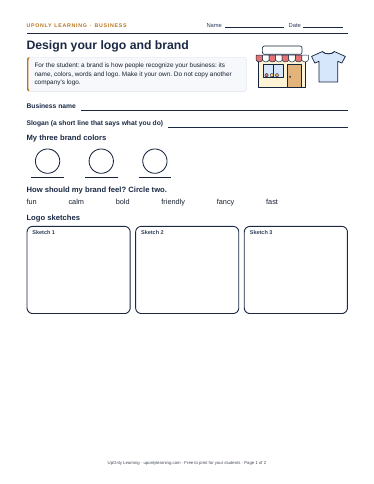
Business and entrepreneurship printables (6)
The twelve parts
Part 2Money Around the World
Open partPart 3Earning and Taxes
Open partPart 4Spending, Prices and Budgets
- 15Needs, wants and choices
- 16Budgeting basics
- 17Where family money goes
- 18Prices and inflation
- 19Ways to pay
- 20Consumer rights
Part 5Saving and Banking
- 21Why save
- 22How banks and credit unions work
- 23Keeping deposits safe
- 24Banking in America
- 25Emergency savings
Part 6Borrowing and Credit
Open partPart 7Investing Basics
- 29Interest and time
- 30What is a stock?
- 31Bonds
- 32Mutual funds and index funds
- 33Risk and diversification
- 34How stock markets work
- 35Retirement accounts
- 36Accounts for kids
Part 8Crypto and Digital Assets
- 37What is cryptocurrency?
- 38Blockchain basics
- 39Stablecoins vs other coins
- 40How crypto prices are listed
- 41Crypto risks and scams
- 42Crypto rules
- Bitcoin explained: the white paper
Part 9The Economy
- 43Supply and demand
- 44GDP and growth
- 45Jobs and unemployment
- 46The Federal Reserve
- 47Interest rates
- 48Trade
- 49Government budgets and taxes
- 50Comparing countries’ economies
Part 10Who Keeps Money Safe
- 51Who keeps money safe?
- 52The SEC
- 53The CFTC
- 54Bank regulators
- 55Consumer protectors
- 56FINRA and state regulators
- 57International regulators
- 58A timeline of money rules
Part 11Protecting Your Money
Open partPart 12Money Meets Business
Open partReading paths
For Teens
From a first paycheck to credit, investing basics, crypto risks and who keeps money safe.
Open the reading listFor Grown-ups
Teaching kids by age, allowance, accounts for kids, emergency savings and scams, plus the Grown-ups’ Corner.
Open the reading listQuestions parents ask
What is financial education for kids?
Financial education teaches how money works: earning, spending, saving, investing, borrowing and keeping money safe. The national standards for personal financial education cover six areas: earning income, spending, saving, investing, managing credit and managing risk[1]. The CFPB describes three building blocks children need: executive function, money habits and norms, and money knowledge and decision-making skills[2]. This subject covers all of these, from kindergarten to grown-ups.
Are there free money worksheets and activities by grade?
Yes. Our free Life Skills and Business practice pages have questions with answers for every grade from kindergarten to 8th grade, and each topic here links to the matching lessons under “Practice this”. Free printable money activities with separate answer sheets are coming soon.
Are there free money games for kids?
The Business You Build has a free business mindset check today, and the Life Skills and Business practice pages are free. A money game is in the works and will link from this page when it is ready.
Is personal finance taught in school?
As of March 2026, the Council for Economic Education counts 39 states that require personal finance courses for high school graduation.[3] Counts differ by definition: Next Gen Personal Finance counts 30 states that require a stand-alone personal finance course.[4] The FDIC’s Money Smart for Young People offers four free, age-appropriate curricula for Pre-K through 12th grade.[5]
Sources for these answers (5)
- Council for Economic Education · New National Standards for Personal Financial Education · councilforeconed.org/new-national-standards-for-personal-financial-education (checked Oct 27, 2026)
- Consumer Financial Protection Bureau · Learn about the building blocks (youth financial education) · consumerfinance.gov/consumer-tools/educator-tools/youth-financial-education/learn (checked Oct 27, 2026)
- Council for Economic Education · Four New States Implement Personal Finance Courses as CEE’s Survey of the States Reveals Positive Momentum in Financial Literacy Education in America · councilforeconed.org/four-new-states-implement-personal-finance-courses-as-cees-survey-of-the-states-reveals-positive-momentum-in-financial-literacy-education-in-america (page updated Mar 18, 2026; checked Oct 27, 2026)
- Next Gen Personal Finance (NGPF) · How many states require students to take a personal finance course for high school graduation? · ngpf.org/blog/advocacy/how-many-states-require-students-to-take-a-personal-finance-course-for-high-school-graduation (page updated Apr 6, 2026; checked Oct 27, 2026)
- Federal Deposit Insurance Corporation, Consumer Resource Center · Youth Financial Education and Its Impact on Adult Financial Decisions · fdic.gov/consumer-resource-center/2026-02/youth-financial-education-and-its-impact-adult-financial-decisions (page updated Feb 2026; checked Oct 27, 2026)
What your student will learn
- Tell what money does and how coins and bills are made
- Explain needs, wants, choices and a simple budget
- Know how banks, credit unions and deposit insurance keep money safe
- Understand interest, borrowing and credit reports
- Describe stocks, bonds and funds as ideas, and why spreading risk matters
- Explain what crypto and stablecoins are, and spot crypto scams
- Read basic economy words: inflation, GDP, unemployment, trade and the Fed
- Name the agencies that protect money and what each one does
- Check a fact by reading its source
Also practice
Free first. Lessons in the library are for members.
- Life Skills practice by gradeFree practice questions with answers, kindergarten to 8th gradeFree
- Business practice by gradeFree practice questions with answers, kindergarten to 8th gradeFree
- The Business You BuildFree business mindset checkFree
- Lesson library: Life Skills and BusinessFull lessons with practice and checksMembers
Coming soon
We are building these next. They will link from here when they are ready.
- A money gamePretend money only: a shop, a money tree and moreComing soon
- Interactive explorersA coin and bill explorer, a “where family money goes” chart and a regulators timelineComing soon
- Free printablesCoins, needs and wants, saving and budgeting sheets, in color and in black and whiteOpen the printables
- FlashcardsKey words in English, Spanish and PortugueseComing soon
Sources for this page
- Consumer Financial Protection Bureau · Learn about the building blocks (youth financial education) · consumerfinance.gov/consumer-tools/educator-tools/youth-financial-education/learn (checked Oct 27, 2026)
- Council for Economic Education · Four New States Implement Personal Finance Courses as CEE’s Survey of the States Reveals Positive Momentum in Financial Literacy Education in America · councilforeconed.org/four-new-states-implement-personal-finance-courses-as-cees-survey-of-the-states-reveals-positive-momentum-in-financial-literacy-education-in-america (page updated Mar 18, 2026; checked Oct 27, 2026)
- Council of Ministers of Education, Canada (CMEC), reporting OECD PISA 2022 · PISA 2022 Financial Literacy: Highlights · cmec.ca/docs/pisa2022/PISA_2022_FL_Highlights_EN.pdf (checked Oct 27, 2026)
- OECD · PISA 2022 Results (Volume IV) – Factsheets: United States · read.oecd-ilibrary.org/en/publications/pisa-2022-results-volume-iv-factsheets_34d60137-en/united-states_baf87dc7-en.html (page updated Jun 2024; checked Oct 27, 2026)
- Board of Governors of the Federal Reserve System · Federal Reserve Board issues Economic Well-Being of U.S. Households in 2025 report · federalreserve.gov/newsevents/pressreleases/other20260513a.htm (page updated May 13, 2026; checked Oct 27, 2026)
- Federal Trade Commission · FTC Testifies before Joint Economic Committee on Agency’s Efforts to Combat Fraud · ftc.gov/news-events/news/press-releases/2026/03/ftc-testifies-joint-economic-committee-agencys-efforts-combat-fraud (page updated Mar 25, 2026; checked Oct 27, 2026)